



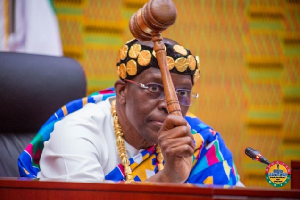
 Alban Bagbin is the Speaker of Parliament
Parliament has passed the Maritime and Related Offences Bill, 2026, to strengthen Ghana's legal framework for tackling piracy, armed robbery at sea and other maritime-related crimes.
The legislation prohibits piracy, robbery at sea and related offences, while giving effect to the provisions of the 1982 United Nations Convention on the Law of the Sea, the 1988 Convention for the Suppression of Unlawful Acts Against the Safety of Maritime Navigation and its related protocols.
According to the committee's report on the Bill, the law establishes a comprehensive legal framework for the prevention, investigation, prosecution and punishment of piracy, armed robbery at sea and other maritime offences.
It also aligns Ghana's criminal laws on piracy with Articles 100 to 105 of the United Nations Convention on the Law of the Sea.
The committee noted that the Gulf of Guinea has experienced increasing maritime insecurity over the past decade, including piracy, vessel hijackings, kidnappings for ransom, armed robbery at sea and the destruction of maritime property.
It said these crimes pose significant threats to maritime trade, regional stability, economic development and the safety of seafarers, making a stronger legal and institutional framework necessary.
According to the report, the absence of a dedicated legal framework has created enforcement and prosecutorial challenges in dealing with piracy and related offences.
"The absence of a dedicated legal framework on maritime offences in Ghana creates enforcement and prosecutorial challenges in dealing with piracy and related crimes. The enactment of this Bill will, therefore, provide the necessary legal basis for the investigation, arrest, prosecution and punishment of offenders," the Committee stated.
The committee said the legislation would strengthen Ghana's maritime sector, improve compliance with international conventions and support the country's ambition of becoming a maritime hub in the Gulf of Guinea.
It added that the new legal regime would strengthen trade security, enhance state port control, reinforce investor confidence, protect Ghana's territorial waters and maritime economy, and empower security agencies to take decisive action against maritime offenders.

Copyright © 1994 - 2026 GhanaWeb. All rights reserved.










