



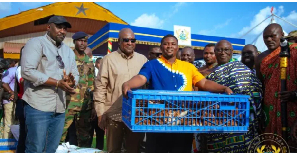
 Enyo shared her experience during a phone-in session on Rainbow Radio 87.5FM's Weekend Morning Show.
A beneficiary of the government's 'Nkoko nkitinkitin' poultry initiative, identified as Enyo, has revealed that although the programme successfully provided chicks to participants, high maintenance costs forced her group to slaughter and eat the birds instead of selling them.
Enyo shared her experience during a phone-in session on Rainbow Radio 87.5FM's Weekend Morning Show.
According to her, their local Assemblyman spearheaded efforts to secure the chicks for rearing.
However, once the birds matured, the group decided to consume them during the Christmas celebrations.
Explaining the decision to eat the chickens—which were originally intended to be reared, sold, and used to generate income—she said the cost of feed was prohibitively expensive and eventually exhausted their financial resources.
Her revelation directly contradicted earlier claims made on the same programme by Abdul Ganiyu Ibrahim, the Municipal Chief Executive (MCE) for the Ayawaso East Municipal Assembly.
Speaking to host Eddie Ray, the MCE praised the ruling National Democratic Congress' policy, describing it as a bold step towards helping Ghanaians establish sustainable poultry businesses.
He claimed that registered participants had successfully reared the birds, sold them, and reinvested the profits into new stock.
"The initiative is not a political stunt; it has succeeded. People have great stories to tell. One beneficiary even gave me two chickens to slaughter as a testament to the programme's success.
"Ayawaso East truly benefited from the exercise. It is real, I have the evidence to show, and the initiative is here to stay. I can share the evidence with you. We are expecting more chicks. It is a positive initiative, and we are hopeful the government will expand it," the MCE stated.
However, when the phone lines were opened to the public, Enyo's testimony presented a starkly different picture of the programme's economic sustainability.
"The initiative is real," Enyo admitted. "A few others and I in Weija Gbawe received the chicks and reared them. However, it reached a point where we could no longer bear the cost of the feed. As a result, we shared the chickens among ourselves and ate them. The meat was juicy and tasted great."

Copyright © 1994 - 2026 GhanaWeb. All rights reserved.










