



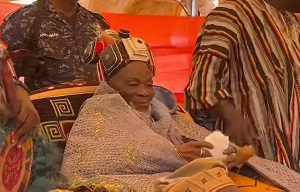
 The late Overlord of Dagbon, Ya-Na Abukari II Mahama
The Okyehene, Osagyefuo Amoatia Ofori Panin, has expressed profound sorrow over the passing of the Overlord of Dagbon, Ya-Na Abukari II, describing him as a remarkable traditional ruler whose legacy of peace, reconciliation, and national unity will endure for generations.
In a statement issued on Monday, July 13, 2026, following the announcement of the Ya-Na's death, the Okyehene said he received the news with "profound shock and deep sorrow," joining the people of Dagbon and Ghanaians in mourning the revered monarch.
The Ya-Na's death was officially announced at the Gbewaa Palace in Yendi after customary rites were performed in accordance with Dagbon tradition. Reports indicate that he died in South Africa, where he had travelled for medical treatment following a short illness.
Osagyefuo Amoatia Ofori Panin described the late Ya-Na as a towering symbol of peace, unity, and statesmanship whose reign helped bring lasting stability to Dagbon following one of the most protracted chieftaincy disputes in Ghana's history.
He said the late King demonstrated that dialogue, reconciliation, and mutual respect remain the surest path to sustainable peace, adding that his leadership transformed traditional authority into a force for national cohesion and development.
"His reign brought to a close one of the most painful chapters in the history of Northern Ghana through the amicable resolution of the protracted Dagbon chieftaincy crisis," the statement said.
Ya-Na Abukari II was enskinned in January 2019 following the successful implementation of the Eminent Chiefs' mediation process led by the Asantehene, which restored the rotational succession system between the Abudu and Andani royal gates after years of conflict.
During his reign, he became widely respected for promoting reconciliation, strengthening traditional institutions, and championing development across the Dagbon Kingdom. He also served as President of the Northern Regional House of Chiefs.
The Okyehene noted that beyond Dagbon, the late Ya-Na worked closely with traditional leaders across Ghana to build consensus on issues of national importance and foster peaceful coexistence among the country's diverse ethnic communities.
Reflecting on their longstanding relationship, Osagyefuo recalled with gratitude the Ya-Na's acceptance of an invitation to serve as Special Guest of Honour during the celebration of the 20th anniversary of his ascension to the Ofori Panin Stool.
According to the Okyehene, the late monarch used the occasion to advocate reforms to Ghana's Council of State to ensure greater participation of traditional authorities in national governance.
"Okyeman remains eternally grateful for his years of friendship, engagement and invaluable counsel," the Okyehene stated.
Describing the Ya-Na's death as a tremendous loss to Ghana, Osagyefuo said Okyeman had lost "a cherished brother, a respected father figure and a trusted friend."
He extended condolences on behalf of the chiefs and people of Okyeman to the Royal Family of Dagbon, the Abudu and Andani Gates, the chiefs and people of the Dagbon Kingdom, and all Ghanaians mourning the revered traditional ruler.
The Okyehene urged Ghanaians to honour the memory of the late King by preserving the peace, unity, and reconciliation he tirelessly championed throughout his life.
"The greatest tribute that can be paid to the memory of Ya-Na Abukari II is to preserve the peace, unity and reconciliation that he tirelessly championed throughout his life. May his enduring example continue to guide Dagbon, Okyeman and all traditional areas in Ghana as they work together for the progress and prosperity of the nation," the statement concluded.
Ya-Na Abukari II is widely remembered as a calm and unifying monarch whose reign ushered in a new era of stability for the Dagbon Kingdom and strengthened the role of traditional leadership in Ghana's national development.

Copyright © 1994 - 2026 GhanaWeb. All rights reserved.










