



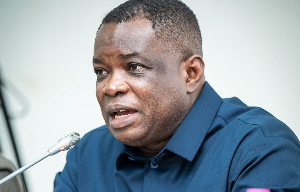
 Kwame Governs Agbodza is the Minister of Roads and Highways
The government is set to replace grid-powered streetlights with solar-powered systems across the country.
According to a report by myjoyonline.com, the move, announced on August 24, 2026, aims to improve the reliability of public lighting and reduce dependence on the national electricity grid.
'Street light components repeatedly stolen after installation' - Richmond Rockson
The Minister of Roads and Highways, Kwame Governs Agbodza, explained that unlike conventional streetlights, which can be affected by faults within a connected system, solar-powered units can operate independently, allowing other lights to continue working in the event of power outage or other technical challenges.
He said the decision means solar-powered systems will be prioritised for all new road projects and streetlight replacement works, with the nationwide transition being led by the Minister of Energy and Green Transition, John Abdulai Jinapor.
“Government has taken a decision to replace all streetlights with solar. With solar, even if one is damaged, the others can work,” Agbodza was quoted as saying.
Agbodza added that the government would no longer install main-grid-powered streetlights under new projects as it moves towards a full transition to solar energy for public lighting.
Meanwhile, the minister clarified that the recent failure of traffic lights at the Tema end of the Accra-Tema Motorway was not caused by the Electricity Company of Ghana (ECG), as initially suspected.
He said investigations revealed that underground cables serving the traffic-light system had been removed, requiring the government to engage a new contractor to completely rewire the system.
Government launches street lighting rehabilitation and installation project
The minister said the nationwide shift to solar-powered streetlights is expected to create a more resilient public lighting system while reducing reliance on electricity from the national grid.
MAG/VPO
#TrendingGH: 'Revisit the case' - Netizens react to controversial court ruling

Copyright © 1994 - 2026 GhanaWeb. All rights reserved.










