



 The prosecution's fourth and final witness (PW4) & EOCO lead investigator, Frank Marshal Cromwell
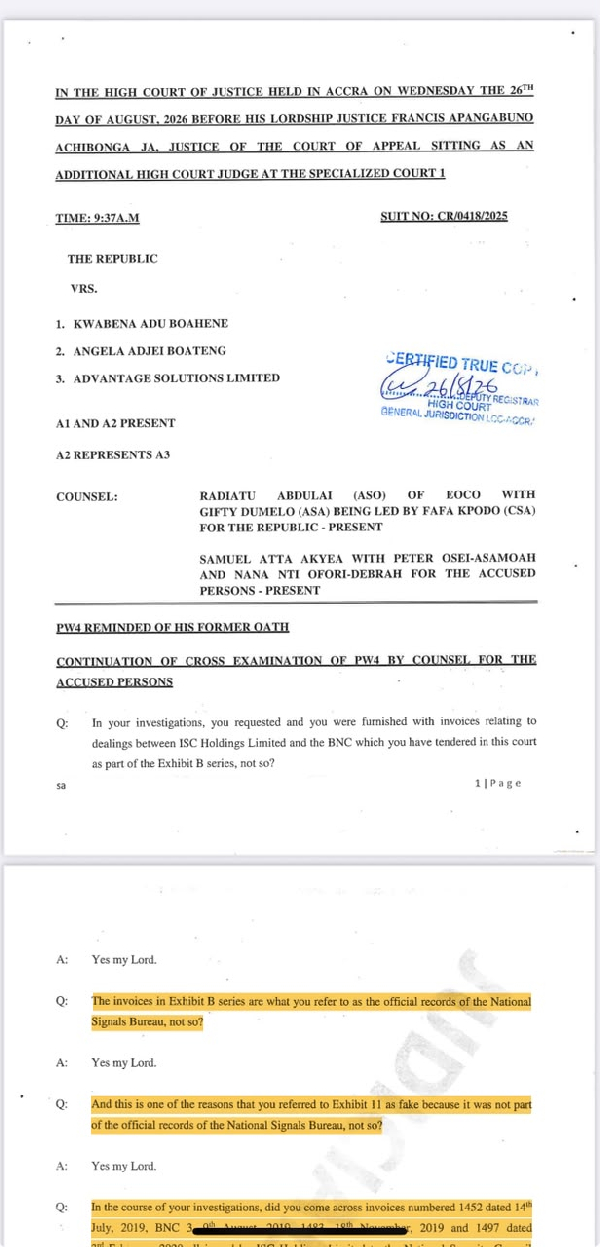
The ongoing trial involving former National Security officials took a significant turn on Wednesday, August 26, 2026, when cross-examination of Frank Marshal Cromwell, a prosecution investigator from the Economic and Organised Crime Office (EOCO), exposed weaknesses in the prosecution’s treatment of certain invoices and financial transactions.
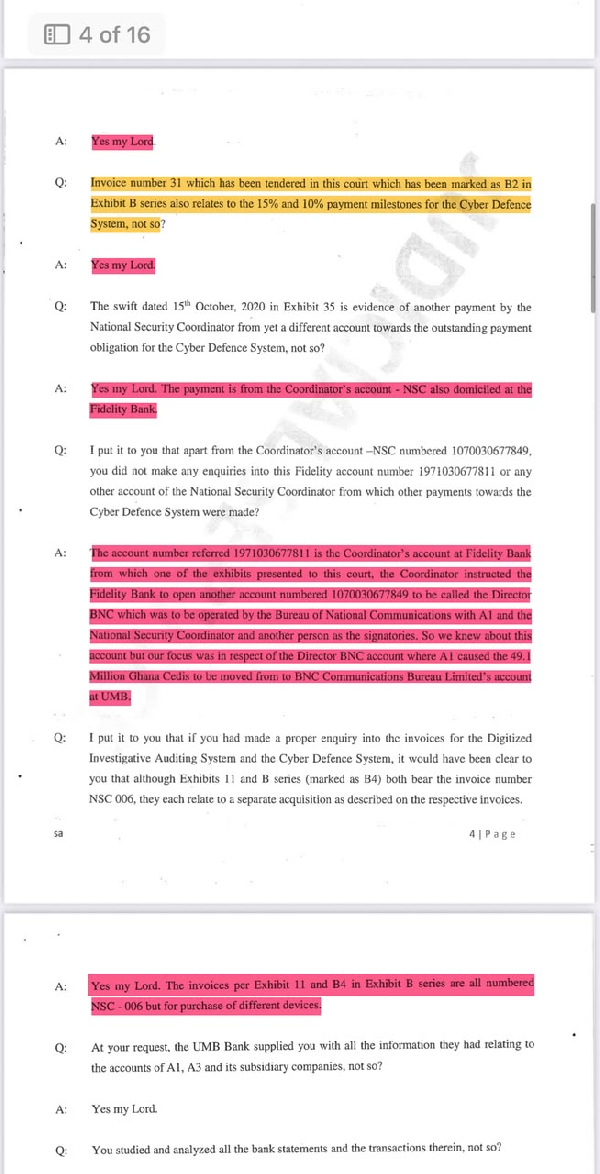
One of the key moments came when the witness was confronted with Invoice No. NSC 006, which he had previously described as a “fake” invoice. Under cross examination, however, he was shown another invoice bearing the same number, NSC 006, contained in the B-series exhibits, and conceded that although both invoices carried the same number, they related to different equipment or devices.
The admission appeared to undermine the suggestion that the duplication of the invoice number, by itself, established that one of the invoices was fabricated. The defence’s questioning therefore raised doubts about the evidential basis for the witness’s earlier characterization of NSC 006 as fake, particularly where the two invoices were shown to relate to different equipment.
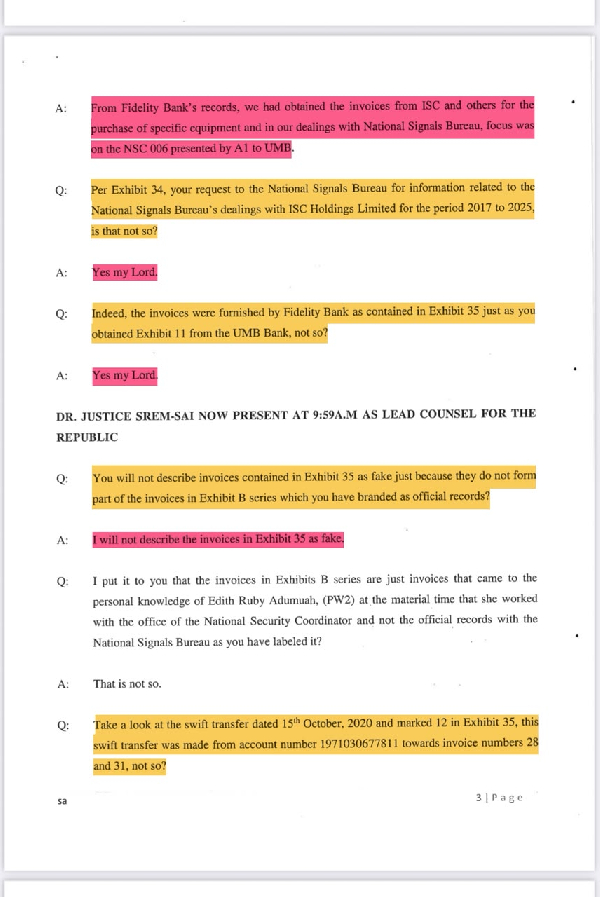
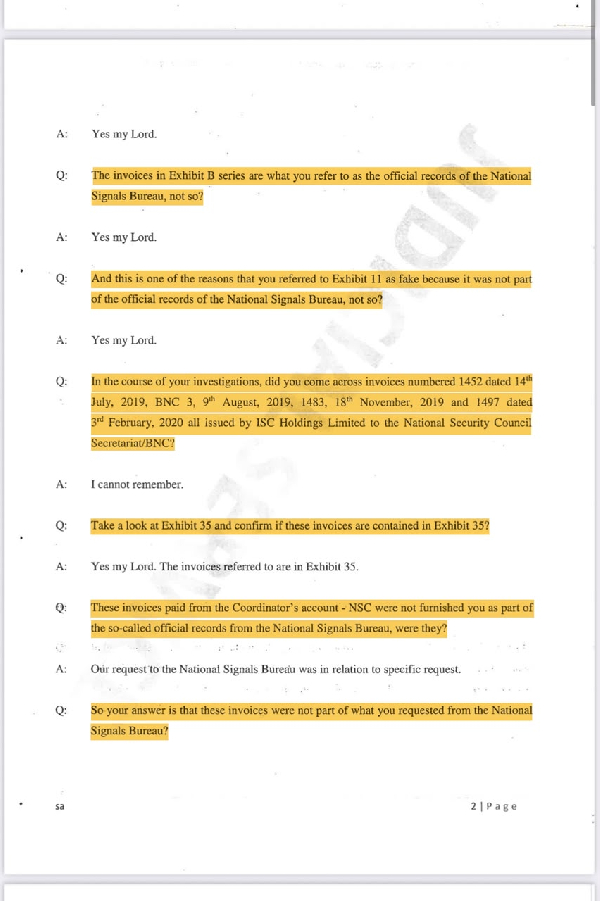
The witness was also confronted with invoices in Exhibit 35 obtained from Fidelity Bank and ISC Holdings Limited but not contained in records obtained from the National Signals Bureau.
Unlike his treatment of NSC 006, he conceded that he would not describe those invoices as fake simply because they were absent from the National Signals Bureau’s records.
The development raises questions about whether NSC 006 was independently established to be fabricated or whether its absence from a particular set of records substantially influenced the prosecution’s conclusion.
The cross-examination further turned to the financial trail involving the National Security Coordinator.
The witness acknowledged the existence of another Fidelity Bank account associated with the Coordinator and accepted that a SWIFT transfer dated October 15, 2020, was made from that account towards Invoices 28 and 31. He further accepted that Invoice 31 related to payment milestones for the Cyber Defence System.
Confusion rocks NSMQ 2026 as Anlo SHS, Kumasi High School leave stage for Augusco in round 4
The evidence suggested that the financial transactions surrounding the Cyber Defence System extended beyond the particular account or accounts on which the prosecution’s financial analysis appeared to focus.
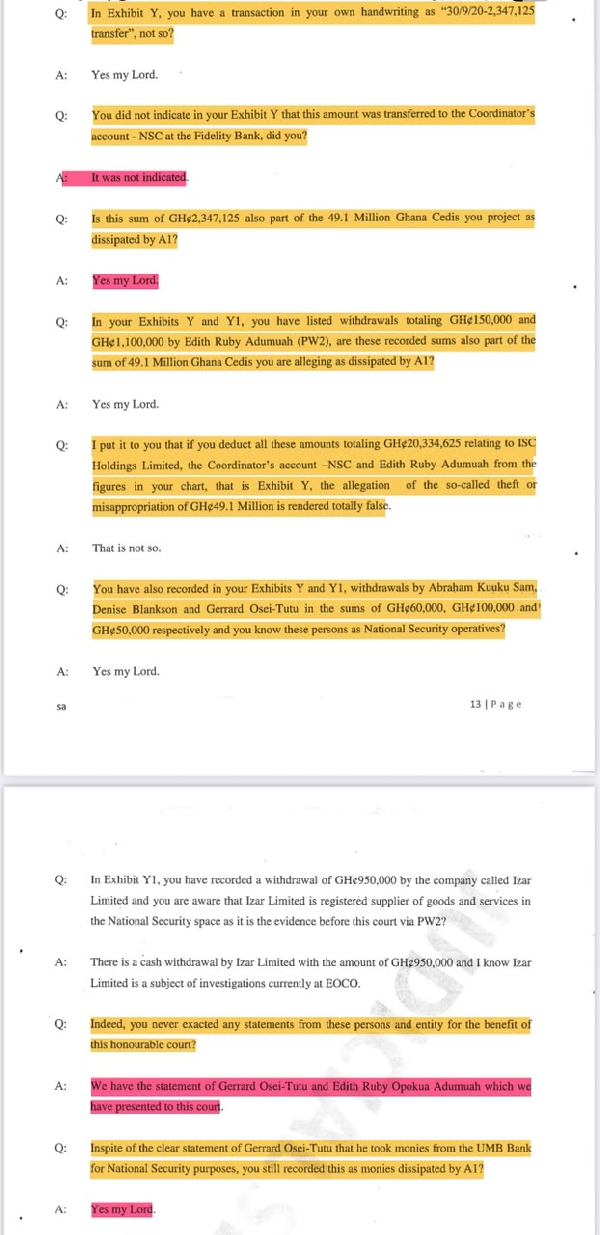
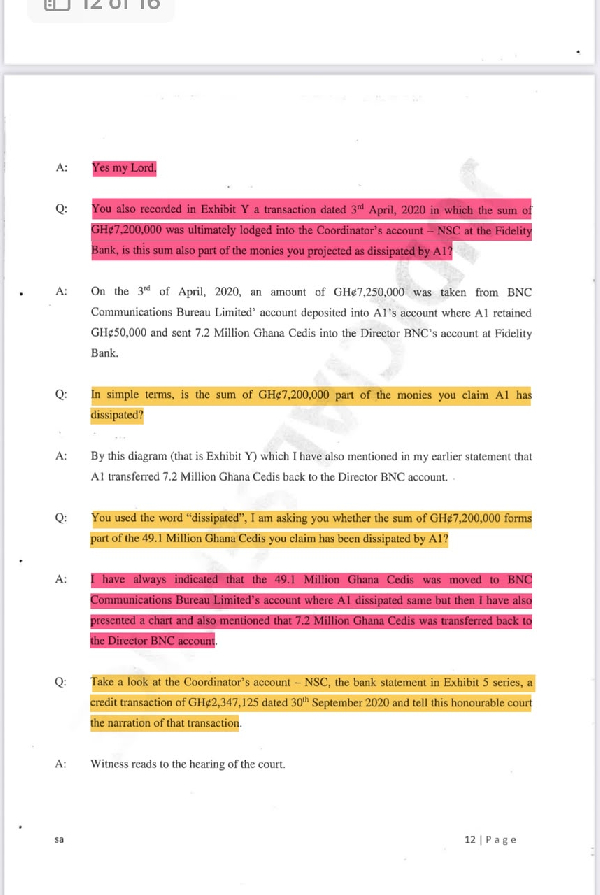
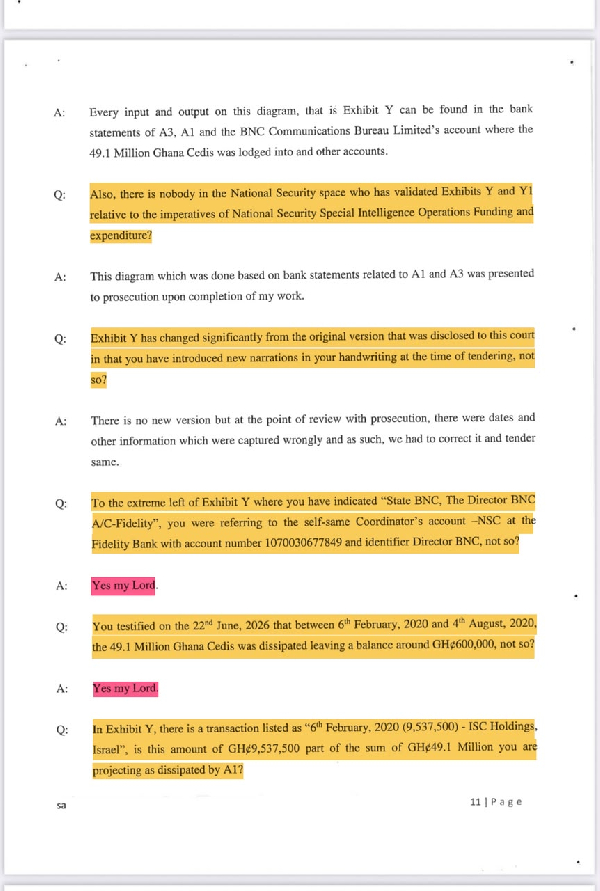
Another contentious issue was the investigator’s characterization of monies transferred through the Coordinator’s accounts to ISC Holdings as “dissipation.” Defence counsel challenged this characterization, arguing that the mere movement of funds could not automatically amount to unlawful dissipation.
The defence maintained that the prosecution was required to establish the purpose of each payment, the recipient, the equipment or service for which the payment was made and, ultimately, whether the funds were unlawfully diverted.
The issue became more significant when the witness was questioned about monies received or withdrawn by National Security operatives.
The defence put to him that there had been cash withdrawals involving PW2 and other National Security personnel, with the transactions forming part of its challenge to the prosecution’s characterization of the movement of funds as dissipation.
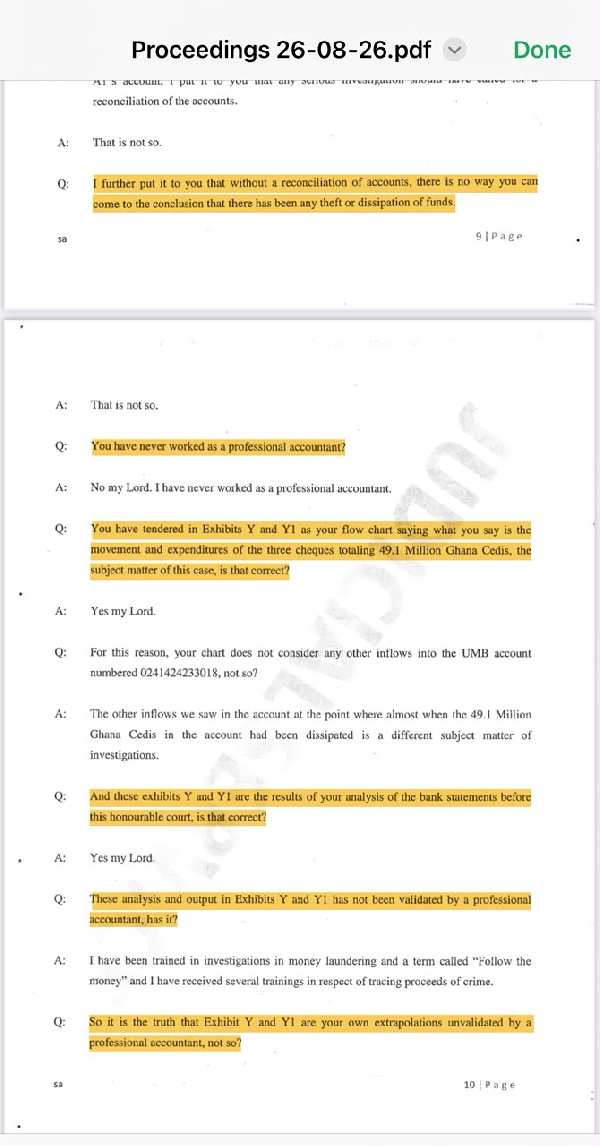
The cross-examination ultimately brought into sharp focus whether the prosecution had conducted a complete reconciliation of the relevant accounts before concluding that funds had been dissipated.
The defence suggested that without a reconciliation of the accounts, there was no basis for concluding that theft or dissipation had occurred, a proposition the witness rejected.
For the defence of Adu-Boahene, the evidence could prove significant. The witness’s concessions provide the defence with grounds to argue that the prosecution may have moved too quickly from identifying financial transactions to characterizing them as unlawful dissipation.
At the heart of the defence’s case is the distinction between the movement of money and proof of unlawful diversion.
A transfer to ISC Holdings does not, without more, establish dissipation; a withdrawal by a National Security operative does not, without proof of its unlawful purpose, establish theft; and two invoices bearing the same number do not, without further evidence, establish that one is fabricated.
The cross-examination therefore left the prosecution facing questions over the methodology used to classify transactions as dissipation and the evidential foundation for its assertion that Invoice NSC 006 was fake.
#TrendingGH: 'Revisit the case' - Netizens react to controversial court ruling

Copyright © 1994 - 2026 GhanaWeb. All rights reserved.










