



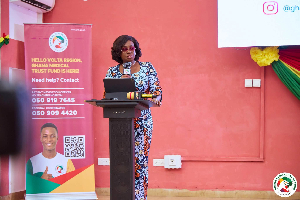
 Obuobia Darko-Opoku
The Ghana Medical Trust Fund has taken its campaign to Ho in the Volta Region, urging communities to help ensure that the cost of chronic illnesses does not prevent patients from accessing the care they need.
At a town hall meeting attended by traditional leaders, faith-based groups, health professionals, students, and community members, the Fund outlined its mandate, eligibility requirements, and application process to raise awareness of the support available to patients and their families.
University of Health and Allied Sciences (UHAS) Chancellor, Prof. Lydia Aziator, described the Fund as a lifeline for families struggling with the financial burden of chronic illnesses. She urged women to seek medical attention as soon as they notice unusual symptoms, cautioning that stigma and fear should not prevent anyone from accessing treatment.
Volta Regional Minister, James Gunu, called on Metropolitan, Municipal and District Chief Executives (MMDCEs), civil society organisations and the media to help spread information about the Fund to communities across the region.
He also appealed to health professionals to assist patients with the application process, stressing that eligible beneficiaries should be supported to access the assistance available to them.
Mr Gunu further underscored the need for transparency and accountability to maintain public confidence in the initiative and pledged the Volta Regional Coordinating Council’s support for the Fund.
Administrator of the Ghana Medical Trust Fund, Obuobia Darko-Opoku also stressed that financial assistance must go hand in hand with improvements in healthcare infrastructure to ensure patients receive the treatment they need.
“Even if people receive financial support, it will come to nothing if the health facilities do not have the needed equipment and infrastructure,” the administrator said.
The administrator explained that efforts were also underway to strengthen Ho Teaching Hospital and UHAS to improve access to specialised healthcare closer to home.
The engagement forms part of the Fund’s efforts to educate the public about its work and reach families who may qualify for assistance but are unaware of how to apply.
The Fund is urging the public to share information about its support services to help ensure that patients and families facing the high cost of chronic illness know where to turn for help.

Copyright © 1994 - 2026 GhanaWeb. All rights reserved.










