


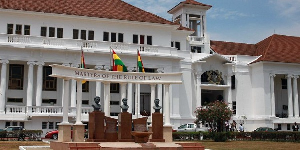
 Abu Shaibu was given a compensation of GH¢500,000
The Supreme Court of Ghana has awarded GH¢500,000 in compensation to Abu Shaibu, a Ghanaian man who spent nearly 24 years on death row before his conviction was overturned, rejecting his request for GH¢2.86 million.
Shaibu had sought compensation from the state for the years he spent behind bars following his wrongful conviction for conspiracy to commit murder and murder.
However, the apex court ruled that although he was entitled to compensation, the amount he demanded was excessive and not sufficiently supported by evidence.
Ghanaian media personality Afia Pokua, sharing details of the court proceedings on social media, disclosed that Shaibu was convicted by the High Court in Tamale on March 26, 2001 and sentenced to death under the Criminal and Other Offences Act, 1960.
Following his conviction, Shaibu remained on death row for more than two decades without filing an appeal.
He eventually sought leave to appeal in June 2022, before formally filing his Notice of Appeal at the Court of Appeal on July 1, 2024.
On January 30, 2025, the Court of Appeal upheld his appeal on all three grounds, ruling that the circumstantial evidence presented by the prosecution was capable of multiple interpretations and fell short of establishing his guilt beyond reasonable doubt.
Consequently, the appellate court overturned his convictions, set aside the death sentence, and acquitted and discharged him.
Four boys found dead in living room at Wasa Asikuma
Following his release, Shaibu applied to the Court of Appeal for a certificate that would enable him to seek compensation from the Supreme Court under Article 14(7) of Ghana's 1992 Constitution.
The Court of Appeal granted the certificate, acknowledging the significant economic, social and health consequences he had suffered during his nearly 24 years on death row.
Armed with the certificate, Shaibu proceeded to the Supreme Court, seeking GH¢2,864,000 in compensation for the loss of his freedom, economic opportunities and the psychological trauma associated with living under a death sentence for more than two decades.
His compensation claim was divided into seven categories, including loss of liberty, lost earnings, social deprivation, reputational damage and the loss of his standing as a trusted leader of Islamic prayers in his community.
He calculated his lost earnings at GH¢3,000 per month over the 24-year period of his incarceration.
However, the state did not challenge his entitlement to compensation. Instead, it argued that the amount being demanded was excessive and proposed GH¢500,000 as a more reasonable award.
State prosecutors maintained that Shaibu's claims relating to lost earnings and business opportunities were speculative because he had failed to provide documentary evidence establishing his actual income before his imprisonment.
The Supreme Court agreed with the state's position.
In its ruling, the court acknowledged the severity of Shaibu's ordeal, particularly the psychological and emotional consequences of spending nearly 24 years on death row.
However, it identified two major factors that weighed against granting the full amount requested.
First, the court observed that Shaibu had waited approximately 21 years before taking steps to challenge his conviction, a delay it found had significantly contributed to the length of his incarceration.
Second, the court held that his financial claims were not supported by sufficient documentary evidence to justify the amount demanded.
In arriving at its decision, the Supreme Court relied on the principles established in Dodzie Sabbah v. The Republic (2015), which outlined the factors to be considered when determining compensation under Article 14(7) of the Constitution.
These factors include the gravity of the offence, the duration of incarceration, the social stigma suffered by the applicant and the need to avoid imposing an unreasonable financial burden on the public purse.
After considering the circumstances, the five-member Supreme Court panel ordered the state to pay Shaibu GH¢500,000 as full and final compensation.
The court emphasised that compensation awards under Article 14(7) are discretionary and must be determined after a careful assessment of the facts and circumstances of each case.
The decision was delivered on June 24, 2026, in Abu Shaibu v. The Republic (2026) GHASC 79.
The judgment was authored by Justice Gaewu and endorsed by four other justices of the Supreme Court.
AM
Inside Ghana’s First 950,000-Barrel Sankofa Oil Shipment | Exclusive Tour
“We Can’t Adapt to This New Road Technology” | Ghanaians React to TRAFFITECH-GH

Copyright © 1994 - 2026 GhanaWeb. All rights reserved.










