


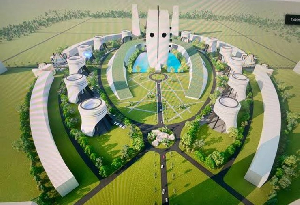
 An architectural drawing of the Wakanda City project
On November 13, 2020, an ambitious vision of turning Ghana into a major pilgrimage destination for people of African descent captured attention after reports emerged that a project dubbed ‘Wakanda City’ was being planned for Cape Coast in the Central Region.
The proposed development was expected to create about 3,000 jobs and establish Ghana as a destination where Africans in the diaspora could reconnect with their roots, heritage and history.
The announcement drew comparisons with Wakanda, the fictional African nation portrayed in Marvel’s Black Panther, which became a powerful symbol of African identity, technological advancement and cultural pride.
The vision behind the project
The proposal, officially named the Wakanda City of Return, was not simply about building another tourist attraction. Its promoters envisioned a modern city that would combine heritage tourism, hospitality, business, healthcare, entertainment and investment opportunities.
The project was a partnership involving the Cape Coast Metropolitan Assembly (CCMA), the African Diaspora Development Institute (ADDI), Pelicape Company Limited and Adepa Africa Investments. It was expected to be privately funded and developed in phases, with construction initially scheduled to begin in 2021.
Plans included five-star hotels, retreat centres, a health resort, conference facilities, entertainment centres and a continental headquarters for ADDI.
Beyond the proposed infrastructure, the bigger ambition was to make Cape Coast a place of pilgrimage for people of African descent seeking to understand their ancestral history, reconnect with their cultural identity and explore Africa's contribution to global civilisation.
The choice of Cape Coast was significant. The historic city played a central role in the transatlantic slave trade and remains home to important reminders of that painful period, including Cape Coast Castle. For generations, people from the African diaspora have travelled to the city to trace their ancestry and learn about the experiences of enslaved Africans.
The project was also conceived against the backdrop of Ghana's 2019 Year of Return campaign, which encouraged people of African descent to visit the country and reconnect with their roots. The subsequent Beyond the Return initiative sought to sustain that relationship through tourism, investment and cultural engagement.
For the project's promoters, Wakanda City of Return was intended to take that ambition further by creating a permanent destination for diaspora engagement rather than relying solely on periodic cultural events and visits.
A multi-billion-dollar ambition
The scale of the proposal became clearer in subsequent reports.
In January 2021, project chairman Dr Kojo Ben Taylor said the proposed development was estimated to cost US$2 billion. He also indicated that about 30,000 acres of undeveloped land had been secured around Cape Coast and Asebu, with documentation processes ongoing.
By March 2021, the African Diaspora Development Institute's Director of Finance, Olivier Kamanzi, told the Ghana News Agency that work was expected to begin in August that year. He said some funds had been raised and that the development was projected to create approximately 3,000 direct and indirect jobs.
The projected employment opportunities, alongside the proposed hotels, health facilities and conference centres, were expected to benefit Cape Coast and surrounding communities while attracting international visitors and investors.
However, these figures and timelines represented the project's announced ambitions, not evidence that the facilities had been completed or the jobs created.
A dream bigger than tourism
The Wakanda City proposal sought to draw on the global popularity of Black Panther, whose fictional African nation presented an image of a technologically advanced, self-sufficient and culturally confident Africa.
For many people of African descent, the film's portrayal of Wakanda resonated beyond entertainment, offering an alternative representation of Africa to the poverty, conflict and underdevelopment often associated with the continent.
The Ghanaian project sought to translate some of that symbolism into a physical development, using Cape Coast's historical significance as a foundation for a broader economic and cultural vision.
It was an ambitious proposition: a city where visitors could experience African heritage while enjoying modern hospitality, healthcare, entertainment and business facilities.
Yet the proposal also came with enormous expectations. Its successful implementation would require substantial investment, effective coordination among the project partners, land acquisition arrangements and sustained interest from international investors.
The original announcement therefore represented more than an architectural ambition. It was an attempt to turn Ghana's historical connection with the African diaspora into a long-term economic opportunity.
Whether the vision would eventually become a reality remained a separate question. The announcements made in 2020 and 2021 established projected costs, employment figures and construction timelines, but those commitments should not be mistaken for completed development.
Five years after the initial announcement, the proposed Wakanda City remains a notable example of the grand ambitions associated with Ghana's efforts to deepen its relationship with the African diaspora.
EA

Copyright © 1994 - 2026 GhanaWeb. All rights reserved.










