



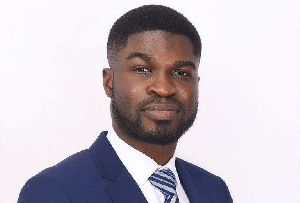
 Justice Ohene-Akoto is the Executive Director of ASEC
The Electricity Company of Ghana (ECG) has been urged to immediately pause its ongoing transformer upgrade, return to the planning table and introduce network redundancy to avert plunging the country into six months of intermittent blackouts.
According to the Executive Director of the Africa Sustainable Energy Centre (ASEC), Justice Ohene-Akoto, ECG’s current approach of turning the entire supply points off before undertaking the upgrade is not technically essential.
Per safety requirements, before any transformer is changed ECG turns the whole supply point off to isolate the system for engineers to install the new transformer.
However, in an exclusive interview with the Business and Financial Times (B&FT), Ohene-Akoto argued that ECG engineers are paid to find solutions and innovative ways of maintaining and modernising the grid… not to plunge communities into darkness.
“They must be innovative and demonstrate how upgrades can be undertaken without disrupting power supply. If the upgrade works were halted today, the outages would cease. My advice and appeal is for them to re-strategise and introduce what we call redundancy,” he said.
Redundancy, in power distribution, means providing an alternative supply path so that maintenance or upgrade work can proceed without disconnecting customers.
The ECG is undertaking what it describes as critical system upgrades – including replacing aging transformers, which is contributing to the recent intermittent power cuts experienced across the country.
The Minister of Energy and Green Transition, John Abdulai Jinapor, noted that the exercise could continue for three to six months.
Minority files RTI request demanding detailed financial records on Energy Sector Levy
However, Ohene-Akoto said this timeline is unacceptable. “We are going to be in power cuts for six months. That is unacceptable.”
This comes in the wake of a fire outbreak at the Akosombo Hydroelectric plant, on April 23, that blew up the primary control room at the facility, prompting a complete shutdown. The shutdown of Ghana’s largest power generator took 1,000 MW off the national grid, triggering widespread outages.
However, the Ghana Grid Company (GRIDCo) has confirmed, on April 29, that four of the units have been restored, bringing 550 MW back into the national grid.
Ohene-Akoto maintained that under a normal generation scenario, ECG retains a spinning reserve of about 1,000 MW – a buffer of unused generation that can be fed instantly into the national grid in times of emergency or to avoid plants running at their maximum capacity.
However, despite current constraints, the energy expert insisted that adequacy is not the cause of the load-shedding witnessed in parts of the country.
The country’s installed capacity stands at over 5,700 megawatts (MW), while national demand peaks at about 4,300 MW. With the loss of 1,000 MW from the Akosombo hydroelectric facility, he maintained that the remaining 4,700 MW should be able to power the country.
“At the moment, I don’t think capacity is an issue. The issue is reliability. We have the capacity, but the issue is the network,” he explained.
With the northern belt bearing the brunt, Mr. Ohene-Akoto identified a structural problem with the country’s power system’s architecture, calling for decentralisation of power generation.
He said the concentration of power generation capacity – both thermal and hydro – in southern parts of the country forces electricity to be transmitted over long, aging lines to serve the middle belt and the north. According to him, this leads to system collapse whenever transmission lines fail.
“If there’s any break in the line, those in the northern and middle belts will suffer. Until we’re able to move some generation closer, the middle belt and northern belt are still going to suffer. Even if they get supply, the quality of supply will still be an issue.
“That is why one of the ways to resolve this is by decentralising our generation plants. We need to have some of them in the north. Right now, all we have in the North is just about 5 megawatts of solar,” he added.
He therefore commended the moving of AMERI thermal power plant from Aboadze to Anwomaso near Kumasi. However, he noted the 250-megawatt capacity plant is inadequate – intimating it can only serve 5 percent of the ever-growing population of the country’s second largest city.
According to him, the failure of successive governments to expand generation capacity will soon catch up with the system, warning that a capacity crunch is imminent.
“Our capacity over the next few months, if not increased, will bring us close to the generation limit – and if care is not taken, we could exceed it.
“Let us streamline the upgrade process and decentralise some power plants; I am confident this will place us in a stronger position,” he concluded.

Copyright © 1994 - 2026 GhanaWeb. All rights reserved.










