



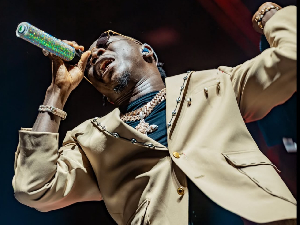
 Live performances remain a key source of income for musicians, but other revenue streams exist
For many Ghanaian musicians, live performances remain one of the most dependable ways to make money.
From concerts and festivals to corporate events and private shows, artistes can command significant fees for appearing on stage.
But performing is only one part of the business.
As the cost of producing and promoting music continues to rise, musicians increasingly rely on multiple income streams to sustain their careers.
From brand endorsements and merchandise to streaming royalties and licensing deals, artistes have several opportunities to turn their music and personal brands into businesses.
This article looks at some of the ways Ghanaian musicians make money beyond stage performances and how these additional income streams contribute to their careers.
Brand endorsements and partnerships
Brand endorsements have become an important part of the commercial side of Ghana’s music industry.
Companies often work with musicians because of their large fan bases, influence and ability to connect with particular audiences.
In return, artistes receive fees for becoming brand ambassadors, appearing in advertisements, promoting products or attending corporate activations.
Ghanaian musicians including Black Sherif, Sarkodie, Stonebwoy and KiDi have secured ambassadorial or commercial partnerships with major brands and institutions.
For a successful artiste, a single endorsement deal can potentially generate income comparable to several performances, depending on the terms of the agreement.
These partnerships also extend beyond simply appearing in adverts. Musicians can earn from social media campaigns, product launches, promotional appearances and specially created content.
Merchandise and the power of an artiste’s brand
Merchandise is another way musicians turn their fan base into a source of income.
Items such as T-shirts, hoodies, caps, wristbands and other branded products can be sold at concerts, through social media or online stores.
Unlike streaming, where an artiste receives a relatively small amount for each play, merchandise can provide a larger return from an individual purchase.
Stonebwoy’s BHIM brand is one example of how an artiste’s identity can extend beyond music. The BHIM name has become a recognisable brand associated with his music, concerts and merchandise.
For musicians with loyal fan bases, merchandise can be particularly useful when releasing a major project or embarking on a tour.
Streaming royalties
10 young Ghanaian skit makers to look out for
Streaming platforms such as Spotify, Apple Music and YouTube have created another income stream for Ghanaian artistes.
Every time a song is streamed, the rights holders receive a share of the revenue generated by the platform. The exact amount varies depending on the platform, listener’s location, subscription type and other factors.
This means an artiste needs millions of streams to generate substantial revenue solely from streaming.
For many Ghanaian musicians, however, streaming serves another important purpose: building an international audience.
A song that performs strongly on streaming platforms can increase an artiste’s visibility and create opportunities for concerts, endorsements and collaborations.
Music licensing and placements
Musicians can also make money by allowing their songs to be used in films, television programmes, advertisements, documentaries and other productions.
This is known as synchronisation, or sync licensing.
For example, a Ghanaian artiste whose song is selected for a television commercial may receive a licensing fee for the use of the music.
Depending on the agreement, the artiste and other rights holders may also earn royalties when the work is broadcast or used commercially.
This creates an opportunity for musicians to earn from songs long after their initial release.
Songwriting, production and royalties
Some musicians also make money from writing songs for other artistes, producing music or owning part of the rights to songs they create.
A songwriter can earn royalties whenever a song they helped create is commercially exploited, depending on the ownership and contractual arrangements.
For established musicians, producers and writers, having a catalogue of songs can therefore provide income beyond individual performances.
Live performances still dominate
Despite these alternative income streams, live performances remain a major source of earnings for many Ghanaian musicians.
Artistes make money from concerts, festivals, corporate events, private functions and tours. Some musicians, such as Shatta Wale and Kweku Smoke, have also spoken about performing in mining communities, attracting lucrative fees.
Ultimately, the modern Ghanaian musician is not simply selling songs. The business involves selling experiences, intellectual property, personal influence, and an artiste’s brand.
AK/EB

Copyright © 1994 - 2026 GhanaWeb. All rights reserved.










