



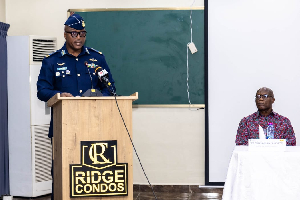
 Air Vice Marshal David Akrong, Commandant, KAIPTC, speaking at the event
The Kofi Annan International Peacekeeping Training Centre (KAIPTC) has brought together key stakeholders in Kumasi for the Ashanti Regional Validation and Dialogue Workshop on the Safety and Security Ecosystem of Illegal Mining in Ghana.
The meeting assembled policymakers, traditional authorities, security officials, researchers and development partners to deliberate on the growing security concerns and governance challenges associated with illegal mining activities across the country.
Organised in partnership with the Embassy of Spain in Ghana, the dialogue forms part of KAIPTC’s broader research and policy engagement aimed at strengthening evidence-based responses to the environmental, governance and security dimensions of illegal mining, widely known as galamsey.
In his welcome remarks, the Commandant of KAIPTC, Air Vice Marshal David Akrong, observed that illegal mining has increasingly evolved from being solely an environmental issue into a wider governance and security challenge that affects land management, community livelihoods and the authority of state institutions.
He explained that interactions with communities in the Ashanti Region indicate that the continued presence of illegal mining operations can weaken existing regulatory systems and allow informal power structures to emerge alongside formal state mechanisms.
Air Vice Marshal Akrong also expressed concern over reports of illegal or improvised weapons circulating in some mining areas.
According to him, the presence of such weapons heightens risks for both residents and security personnel, while also raising the possibility of connections between local mining operations and broader organised criminal activities.
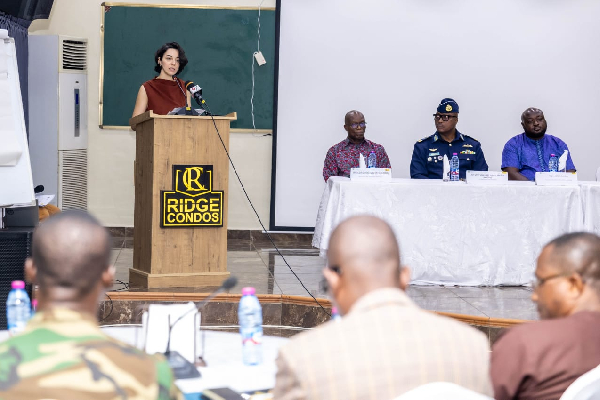
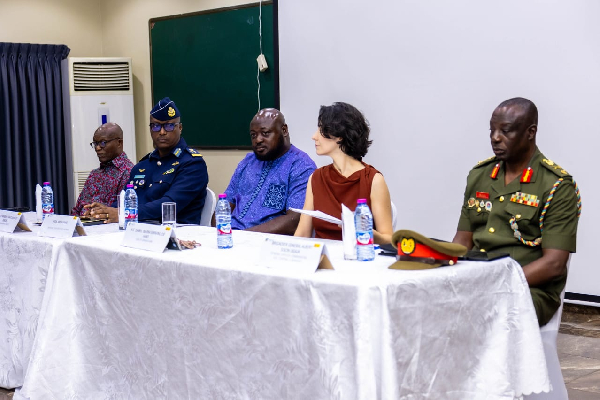
The Spanish Deputy Ambassador to Ghana, Isabel Ibarra Serrano de Haro, reiterated Spain’s commitment to supporting initiatives that strengthen accountable governance, safeguard communities and encourage collaborative approaches to addressing complex security challenges affecting mining areas.
Representing the Ashanti Regional Minister, the Municipal Chief Executive for the Asokwa Municipal Assembly, Amoh Kamel, also highlighted the need for closer cooperation between local authorities, traditional leaders, security agencies and communities in efforts to address illegal mining while protecting livelihoods and the environment.
The workshop forms part of KAIPTC’s ongoing research initiative aimed at gaining a deeper understanding of the underlying drivers and impacts of illegal mining within the Ashanti Region.
Through consultations with community representatives, traditional authorities and security institutions, the process seeks to produce practical recommendations to guide national policy discussions.
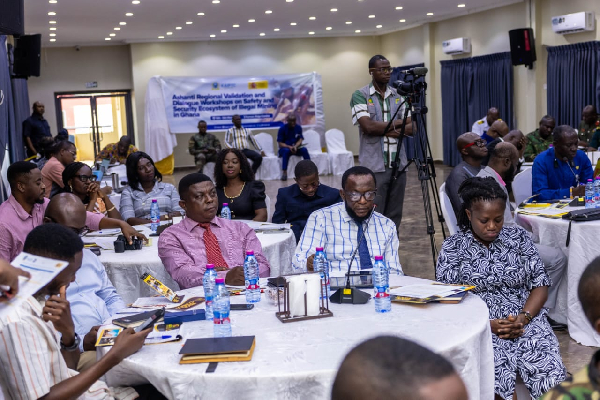
Participants at the workshop are expected to review and validate research findings, share experiences from affected communities and offer professional perspectives that will contribute to policy recommendations for a national dialogue forum scheduled to be held in Accra.
As the discussions progress, stakeholders continue to explore practical and context-specific strategies that can enhance local resilience, strengthen coordination among institutions and support sustainable, community-led approaches to security and natural resource governance.

Copyright © 1994 - 2026 GhanaWeb. All rights reserved.










