



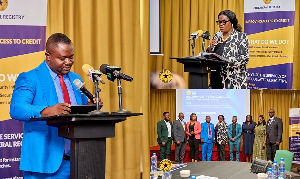
 GAREB stressed that real estate professionals must understand financial and legal system
The Ghana Association of Real Estate Brokers (GAREB) has called for deeper collaboration between real estate practitioners and the Bank of Ghana (BoG) to improve transparency and reduce risks in property transactions through the effective use of the Collateral Registry system.
Speaking at a stakeholder engagement on the Collateral Registry system in Accra on May 28, 2026, the President of GAREB, Jacob Adofo Ansong, said the system is critical in addressing long-standing challenges in Ghana’s real estate sector, where buyers and brokers have often fallen victim to hidden encumbrances on properties.
“For a very long time, real estate brokerage in Ghana operated largely through trust, word of mouth, personal relationships, and experience. In many cases, brokers and agents themselves did not even know where to check or what questions to ask before marketing or introducing a property,” Ansong explained.
He noted that the absence of structured checks in the past led to several disputes and financial losses in the sector.
Reserves up, cedi down
“People lost money. Some bought land that had already been used as collateral for loans without knowing,” he stated.
According to him, the Collateral Registry system represents a key tool in professionalising the industry and protecting clients.
“As brokers and agents, we are beginning to understand that professionalism is not only about finding buyers or closing deals. It is also about responsibility,” he said.
He continued, “It is about being able to confidently tell a client that proper checks have been done.”
The GAREB President stressed that real estate professionals must understand financial and legal systems connected to property transactions to avoid exposing clients to unnecessary risks.
“Clients rely on us for guidance. Sometimes they trust our word before they even speak to a lawyer,” he noted.
He also called for stronger collaboration between regulatory and financial institutions to improve the safety and credibility of the sector.
“The real estate sector touches many institutions… So for us, building relationships with institutions like the Bank of Ghana is important,” he said.
On behalf of the Bank of Ghana, the Deputy Head of the Collateral Registry Department, Rosemary Akabutu, who read a speech on behalf of the Head of the Collateral Registry Department, Fred Asiamah-Koranteng, underscored the importance of the registry in safeguarding credit and asset transactions in the country.
She explained that the Collateral Registry remains a key financial infrastructure designed to improve access to credit while ensuring transparency in secured transactions.
She further noted that collaboration with industry players such as real estate brokers is essential in ensuring that the system achieves its full impact in reducing disputes and enhancing due diligence in property-related transactions.
Touching on public perception of the industry, Jacob Ansong acknowledged concerns about unregulated actors but emphasised that the sector is now governed by law.
“The Real Estate Agency Act, 2020 (Act 1047) established the Real Estate Agency Council as the legal regulator of real estate agents and brokers in Ghana. That means today, real estate agency practice in Ghana is a regulated professional business,” he explained.
He also cautioned against generalising misconduct within the sector, noting that licensed professionals are committed to ethical practice.
“It is important that when issues happen, specific individuals or firms responsible are identified and dealt with, instead of creating the impression that everybody operating within the profession is dishonest,” he said.
He further urged stakeholders, including the media and the public, to support enforcement efforts by demanding proof of licensing before engaging agents.
“We are obligated to report such individuals and firms to the Real Estate Agency Council,” he added, calling for stricter enforcement against unlicensed operators.
The stakeholders concluded that stronger regulation, education, and collaboration are essential to cleaning up the sector and restoring public confidence in real estate practice in Ghana.
MA

Copyright © 1994 - 2026 GhanaWeb. All rights reserved.










